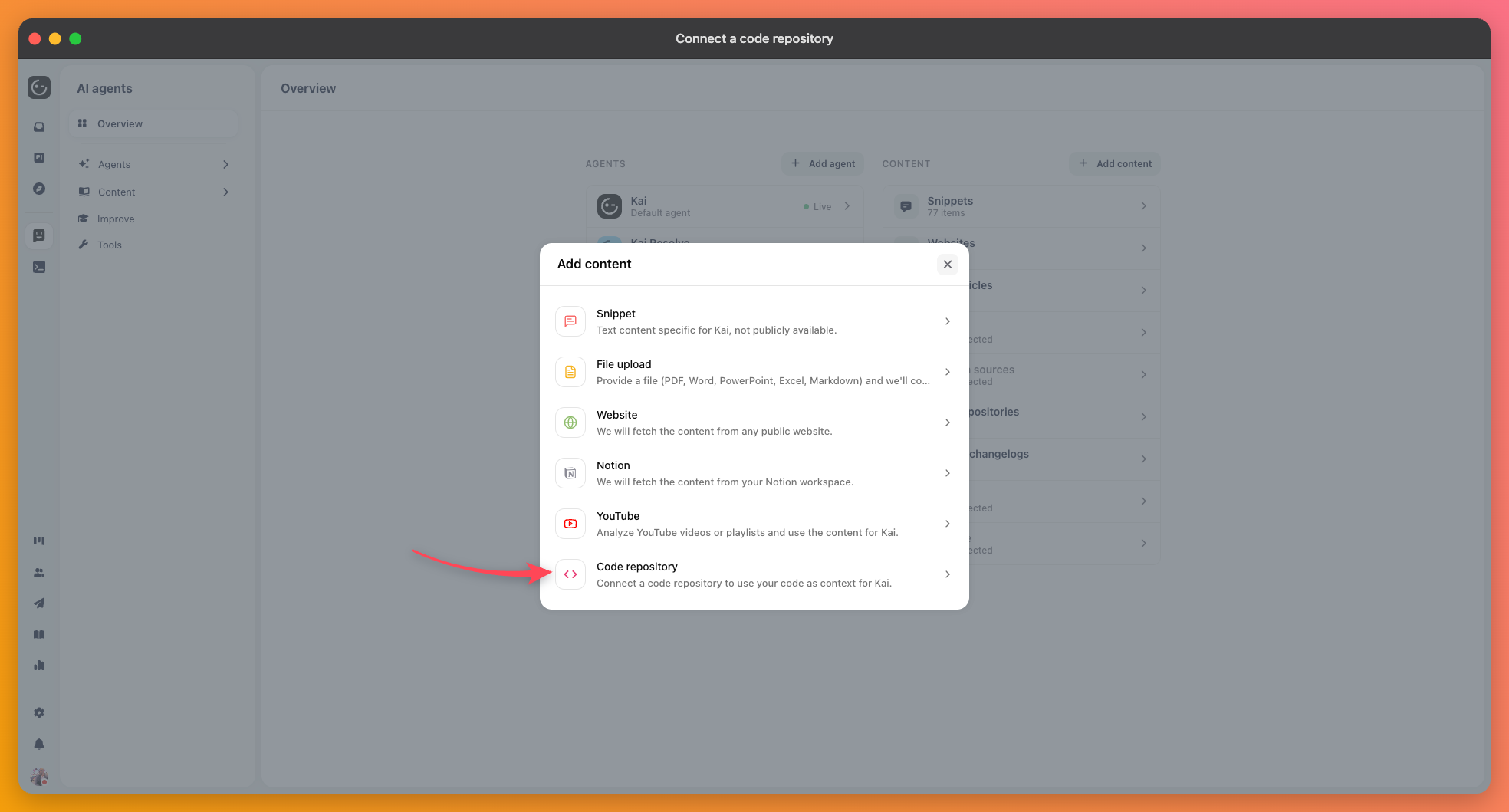
Plenty of product behaviour was never written down anywhere except in the code: what a validation actually rejects, which formats an import accepts, what a limit really is. Connecting a repository lets the AI answer from that.
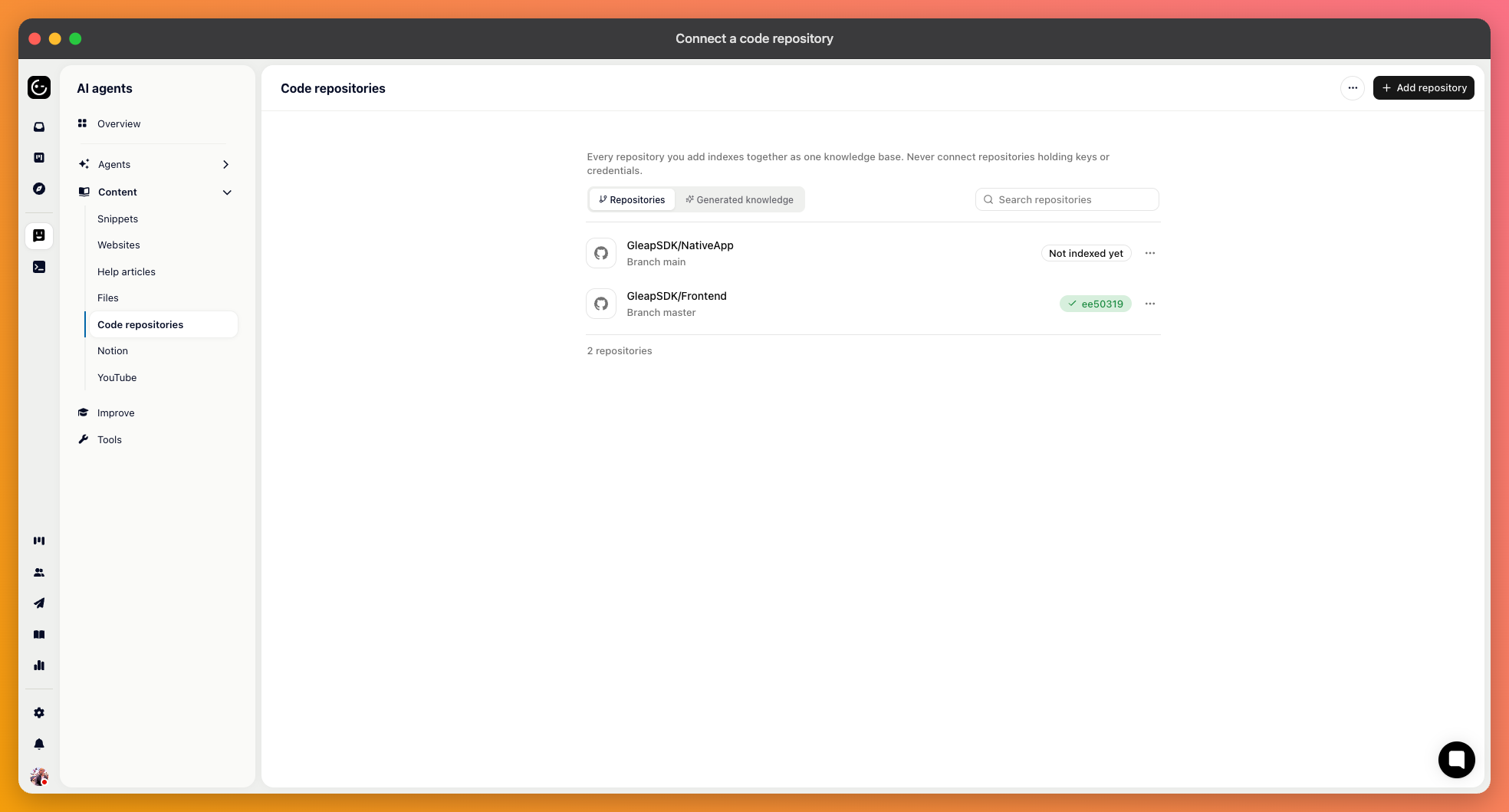
Open the Code Repositories source and connect either GitHub or Azure DevOps. You authorise the connection on their side, then pick the repositories to add and the branch to read — normally your main branch, since that's what's actually running.
Indexing then runs in the background. A large repository takes a while, and the source shows whether it's still indexing, ready, or failed. When it's done, you can see what was derived from the code, which is the fastest way to judge whether this source is earning its place.
An index reflects the branch as it was when it ran. Re-index after a release that changed behaviour customers ask about, or the AI will confidently describe the version you shipped last quarter.
Code is unambiguous about what the system does. It says nothing about what a customer should do, and it doesn't know your policies — a refund window lives in a contract, not in a function.
So it complements documentation rather than replacing it. It's at its best on exact behaviour, error conditions, and limits; at its worst on anything involving judgement, pricing, or process.

The safe pattern is to tag this source and keep it out of the customer-facing scope, so your own team's agents can use it while the public bot can't. An engineer asking “why does this import reject that file” gets a precise answer; a customer gets one written by a person who read it.
If you do want it answering customers directly, read a sample of what was derived from the code first, and ask it a few questions you'd hate to see answered badly.