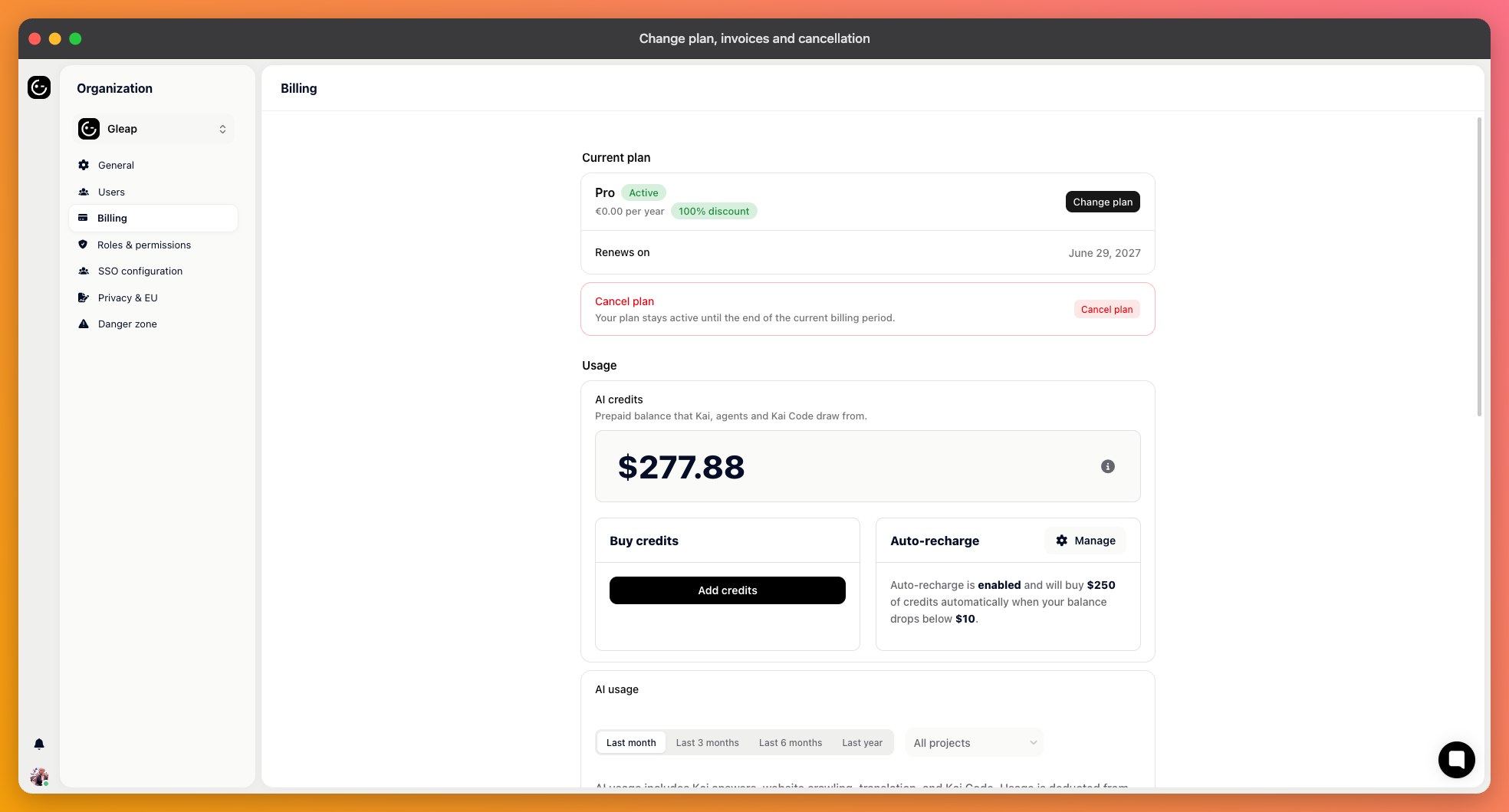
Billing lives at the organisation level, not per project, and it's available to administrators.
The billing page shows your current subscription and what it costs, including any discount applied. Pick a different plan to change it — upgrades take effect immediately, so a feature you upgraded for is there straight away.
Switching between monthly and annual is the same operation. Annual costs less per month, at the price of committing for the year.
The same page holds your customer details, billing address and payment method, each with its own update action. Payment details are handled by the payment provider rather than stored by Gleap.

Past invoices are listed on the billing page, each downloadable. That's the self-service answer for finance — nobody needs to ask support for a copy.
Enterprise agreements can be paid by invoice rather than card.
Cancellation is scheduled rather than immediate: your subscription runs to the end of the period you've paid for, and stops renewing.
While a cancellation is scheduled, the page offers Reactivate subscription — so changing your mind before the period ends is one click and loses nothing.
Cancelling the subscription is not the same as deleting your data. If you also want the data gone, delete the projects or the organisation deliberately — and export what you need first.
Two things are easy to forget. Your widget will still be installed in your product and will stop working — remove the snippet, or your users get a messenger that doesn't respond. And any custom domain pointing at Gleap should be repointed before it dead-ends.
Credits are separate from the subscription — buying credits isn't a plan change, and cancelling a plan isn't a refund of unused credits. If you're winding down, stop auto-recharge first so it doesn't buy more on the way out.
The billing page is where it shows, and updating the payment method there is the fix. Cards expiring is the usual cause, and it's worth checking whether the card on file belongs to someone who still works with you.